Russia/Dance
Early History
The first Russian folk music and dance extends back into the 10th century, when Slavic tribes moved into Russia. The Slavs were known for their knowledge and mastery of instruments, songs and dance. Because of the many invasions of the country and the resulting inter-cultural mix, many of the original dances have either been combined with each other into new forms or been lost over time.
The first dances were only known by the peasants and lowest classes. The upper classes and aristocracy did not dance themselves, but they instead enjoyed watching the performances of dance troupes and clowns. There were also street entertainers, or "skomorkhi," who sang and danced and performed tricks as they wondered from town to town.
According to Russian dance director Mikhail Victorovich Smirnov, the first established record of Russian dance occurred in 907AD when Vechshiy Oleg, first grand prince of Kiev, was celebrating his victory at Constantinople. Although his troops could not infiltrate the city walls, they did force the Greeks to enter into a treaty. At the celebration, male dancers dressed up like bears, and several dancing bears were clothed like Russians. At the end of the feast, Oleg demanded the bears be released back into the wild and the dancers be executed. Apparently, Oleg, who was partially blind, thought the dancers were from the northern tribes who owed him numerous tiger skins.
Holiday Traditions
Some of the Russian folk songs and dances were associated with calendar events, such as planting and harvesting and others with family rites, such as birth, weddings and funerals. Most Russian holidays have been celebrated in the fall and winter when the farming is done for the year. The entertainment begins with a prayer and is followed with an abundant feast, singing, dancing and a series of entertaining fist fights or "stenka na stenku," "wall against wall."
Folk Dance Clothing
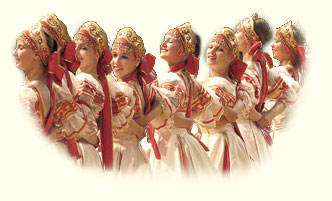
The clothing, which accompanied many of the dances, was also based on the event. Holiday headwear included a "kokoshnik," or headdress that was decorated with pearls and gold thread; embroidered and decorated blouse or shirt; "sarafan," or jumper; belt and ornamented apron. The primary color was red, which meant "beautiful." The men wore "kosovortkas," or shirts fastened on the side; belt; narrow trousers; semi-high or high boots.

© Gans 2011